

“아시아 청년들이 모여 함께 목소리를 내다.”
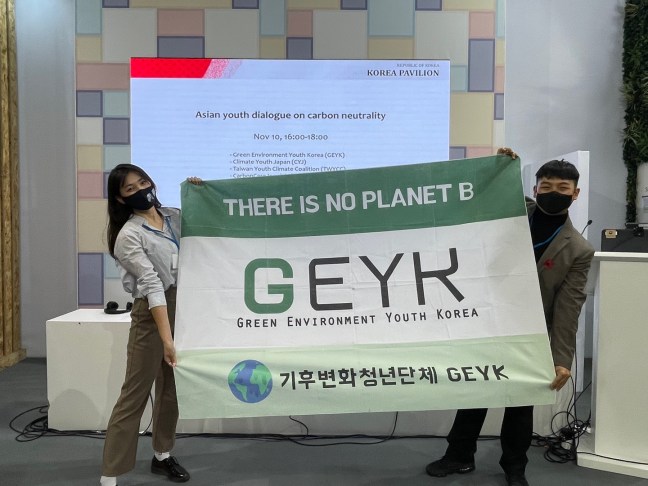
지난 2021년 11월 10일(수), COP26 Blue Zone 내부 한국 홍보관에서 GEYK의 Side event가 열렸습니다. ‘Asian Youth Dialogue on Carbon Neutrality (아시아 청년들의 탄소중립에 관한 담론)’ 이라는 주제로 열린 이번 행사는 GEYK의 김선률, 대만 TWYCC의 찬청룽과 챠오주린, 홍콩 CCIL의 허미아 찬, 일본 CYJ의 코하나 야나기사와가 패널로 참석하였고 GEYK의 권유정 활동가가 행사를 진행하였습니다.
각국 청년 환경 단체 소속으로 이루어진 패널들은 2050년까지 수행되어야 하는 탄소중립에 대한 각 나라별 정책과 행동계획을 발표하였고, 그러한 정책과 행동의 과정 중에서 청년들이 해야하는 일과 할 수 있는 일, 주목해야 하는 일들에 대해 초점을 맞추어 대화를 이어나갔습니다.
GEYK의 권유정 활동가는 행사를 시작하며 탄소중립의 개념에 대해 간략하게 소개하였고, IPCC 1.5도 보고서의 권고를 충족하기 위해 2050년까지 전 세계의 많은 국가들이 탄소중립을 실현해야 함을 강조하였습니다. 또한 GEYK의 주요 활동에 대한 간략한 소개에 이어 한국 정부가 환경부를 통해 제 1차 미래세대 포럼을 개최하여 청년들과의 더 강력한 대화를 장려하고 있다는 사실을 덧붙였습니다.
한국, 대만, 홍콩, 일본의 패널들은 탄소중립에 관한 각 국의 현재상황을 발표하고 탄소중립에 대한 강력한 열망과 동시에 명확히 마주하고 있는 한계점에 대해서도 이야기를 나눴습니다. 불확실한 기술에 치중된 탄소 중립 계획, 민간 및 공공 부문간의 신뢰 결여, 2050 탄소중립 로드맵의 명확성 결여, 과학적 접근을 기반으로 하는 목표에 대한 지원부족 등이 주요한 문제점이었습니다. 이어 각 패널들은 각국의 탄소중립 정책이나 방향에 대해서 청년들이 해야하거나 하고 있는, 혹은 할 수 있는 일들에 대해 공유했습니다. 예를 들어 한국의 경우 GEYK을 포함한 8개 청년단체들이 발표한 ‘2040 청년들이 제안하는 기후중립 시나리오’가 그것이었고, 대만의 경우 다른 NGO및 의원들과 협력하여 발의한 온실가스 감축 및 관리법 개정안, 홍콩의 경우 FFF의 학교 파업 보호 조정, Local COY 개최, 기후행동 촉구 청원에 대한 청년 연서명, 마지막으로 일본의 경우 각 부처 정책제안과 지역사회 및 교육기관을 대상으로 한 신재생에너지 인프라 설치 촉진 등의 활동을 소개하였습니다.
패널토론은 탄소중립에 대한 정의롭고 포괄적인 전환이 청년들에게 무엇을 의미하는지, 청년들이 탄소중립에 대한 담론에 어떻게 참여하고 행동할 수 있는지, 그리고 탄소중립 활동에 참가함에 있어서 청년들이 그들의 역량을 어떻게 성장시키고 지변을 확대할 수 있을지에 대한 핵심 질문들로 이어졌습니다. GEYK의 김선률 활동가는 “기후위기로 인해 가장 큰 피해를 보는 것은 약자와 소수자들” 이라고 밝히며 “탄소중립에 있어서 정의롭고 포괄적인 접근은 누구도 위기에 먼저 노출되지 않는, 공정한 전진을 필요로 한다. 탄소중립으로의 대 전환이 사회 경제 구조의 포괄적인 변화를 요구하는 만큼 그 과정에서 누구도 소외되어서는 안 될 것이다.” 라고 대답을 마쳤습니다. 이어진 질문에서 CCIL의 허미아 찬 활동가 또한 “기후 문제에 대해 리질리언스를 구축하고, 해결책과 적응계획을 함께 수립하기 위해서는 지역적인 접근이 고려되어야 한다며 지역사회와의 대화가 접근법 중 하나로 평가되어야 한다.”고 강조했습니다. 그 외에도 패널 토론 내내 ‘의미있는 참여’ 라는 말이 계속 사용되었는데, 이는 청년들의 참여를 장려하기 위해, 그리고 그들의 활동이 단발적으로 그치는 것이 아니라, 각 국의, 더 나아가서는 범 지구적인 탄소 중립으로의 흐름에 영향을 끼칠 수 있는 참여를 강조하는 데에 활용되었습니다.
행사가 마무리 단계로 넘어가며 아시아 청년들의 목소리가 국내를 넘어 국제적 수준으로 전달되고 합의될 수 있도록 청년단체간 강력한 협력을 약속했습니다. 행사를 통해 공유된 각 청년들의 경험과 의견들은 청년들이 기후위기에 대해 능동적인 조치를 취해야 하며 어떠한 방식으로 취해야 할지를 분명히 보여주었습니다. 이번 행사를 기회삼아 지속적인 청년들의 네트워크가 형성되고, 이러한 네트워크가 청년으로서 기후위기 문제 해결에 앞장설 수 있는 방안에 기여할 수 있기를 기대하며 행사가 종료되었습니다.
“Small actions are bigger if we cooperate together, through different networks at the youth level”
On 10 November (Wed), GEYK hosted the Asian youth dialogue on carbon neutrality. The following panels followed, Sunryul Kim from GEYK, Chan Cheng Long and Chiao jou Lin from TWYCC, Hermia Chan associated with CCIL, and Kohana Yanagisawa from CYJ. The panels from current working youth environment organizations spoke on behalf of their national governments’ action plans to ensure carbon neutrality by 2050. Moreover, the key focus was to engage a more youth focused dialogue on the current gap from ambition and action made by our government, and as youth what the next steps are to ensure we are headed to the right path for carbon neutrality.
Yoo Jung started the session with a brief introduction on the concept of carbon neutrality, how according to the IPCC report we need to offset the amount of carbon we released into the air by 2050 to secure 1.5 degrees Celsius. Hence many national governments worldwide announced carbon neutrality in their domestic regime. Nonetheless, it should be more than just an announcement, we should ensure we have the next steps our governments needs to take to ensure the announcement is more than just ambitious words. Following a brief introduction on GEYK and its key activities, the effort were shared made by South Korean government to encourage stronger dialogue with the Youth through implementing the first environmental forum with the future generation, hosted by the Ministry of Environment.
The panels from South Korea, Taiwan, Hong Kong, and Japan presented their current situation back home. Despite the strong ambition pledged by the national governments for carbon neutrality, strong setbacks were shown. Such as, the controversy on energy supply on ‘carbon-free gas turbines’, the broken trust among private and public sectors, lack of clarity on the roadmap to secure carbon neutral by 2050, and the lack of plans supported by a scientific based target. Following the clear gap on more action needed to ensure carbon neutrality by the governments, each working youth environment organization share their approaches. For example, in South Korea the ‘2040 Climate Neutral Scenario’ was proposed by the Korean youth including GEYK. In Taiwan, TWYCC cooperated with other NGOs and legislators to propose an amendment act on GHG Reduction & Management Act. Hong Kong also shared their actions such as coordinating the FFF school strike and protect, hosting the Local COY Hong Kong, and proposing a youth statement on the climate action petition. Japan also shared CYJ works such as proposing policies to the ministries and agencies, promoting renewable energy installation to schools and the community, and to take action on including sustainable lifestyle with carbon neutrality.
The panel discussion followed with key questions understanding what just and inclusive transition means for youth regarding carbon neutrality, how youth can be included and engaged in the actions and dialogues, and key learnings on capacity building. Sunryul highlighted that as weak and minority suffer the most, an inclusive approach to a just and fair carbon neutrality transition calls for ‘no one left behind.’ As it requires change in the societal economic structure no one should be alienated in the process. Other comments were made such as how youth should have a stronger understanding to actively take part in the process and dialogue with the decision makers. In addition, Hermia highlighted that dialogue with local communities to build resilience, set up solutions and adaptation plans together should be valued as one of the approaches. As carbon neutrality is not just about the transition but it needs to start dialogue with local communities. The term ‘meaningful participation’ was highlighted throughout the discussion. In order to encourage youth participation, Kohana suggested to arrange more youth focus assemblies and conference authorized by the government, and to encourage decision makers to take risk, regardless of their fear of change. Moreover, Chiao shared to build a clear focus on who the stakeholders are, and what the impacts are, as despite our common identify as youth we have different impacts from climate, and we come from different backgrounds. Then the next step will be to clarify the steps to reach clear and straightforward goals. This structure can be supported by a clear scenario. Sunryul also highlighted that coordination with relevant agencies is important, as it cannot be solved by single stakeholders through individual actions as the process to transition to carbon neutrality is complicated.
The session ended with strong transboundary cooperation among the youth organizations, to ensure youth voices, especially in the Asia region, are delivered at the national and international level. Each learnings, insights, and experience among the youth organizations shared during the session clearly highlighted a common conclusion that while the decision makers need to secure seats in meetings and conferences for youth, youth also need to take a proactive action through strengthening capacity building, building the inter-generation conversation across national borders to maximize our resources and opportunity to ensure our voices are heard, our concerns are reflected, and our demands are taken seriously. Moreover, localizing the happenings in the international setting was also strongly recognized in the session.















 기후변화청년단체 GEYK